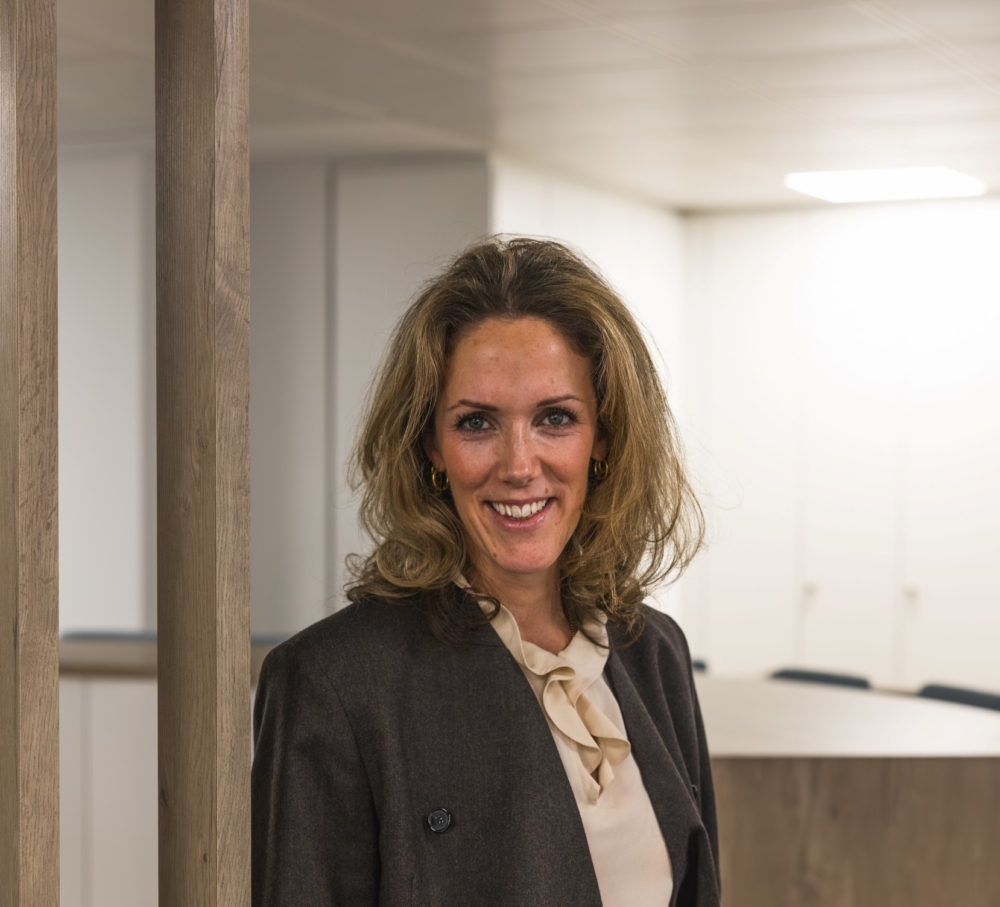
In this episode of DC Talks, Emma O’Connor speaks with Jade Fisher-Ryner from The Wren Project about the importance of creating psychologically safe workplaces, particularly for employees living with long-term health conditions.
Drawing on both professional expertise and personal experience, Jade explains that psychological safety means creating an environment where employees feel able to speak openly about challenges, ask for support, and discuss workplace adjustments without fear of judgement or negative consequences. She highlights the value of trust, active listening, flexibility, and ongoing dialogue between employers and employees.
The discussion explores practical steps employers can take, including focusing on the impact of a condition rather than the diagnosis itself, building high-trust relationships, promoting disability inclusion, and taking a proactive rather than reactive approach to employee wellbeing. The key message is clear: managers do not need to have all the answers, but they do need to create space for honest conversations, listen with empathy, and work collaboratively to find solutions that support both the individual and the organisation.
This episode offers practical, business-focused insights for employers looking to foster a more inclusive, supportive and engaged workplace culture.
Transcript
Emma O’Connor: 00:08
Welcome to DC Talks, a podcast series from workplace specialist law firm Door Clayton, where we take a deeper dive into a legal, leadership or HR issue. I’m your host, Emma O’Connor, Employment Partner and Head of Client Training and in this episode of the podcast, I am pleased to be joined by Jade Fisher-Ryner, Engagements and Events Officer at the Wren Project but before we introduce Jade and today’s topic, just to remind you that this is a podcast. We are not giving you legal advice, but if you want to find out more about Doyle Clayton or the Wren Project or the topics that we’re discussing today, then please do get in touch with us and all the details you need will be in the show notes. So, to this episode of DC Talks and as I said, I’m thrilled to be joined by Jade Fisher-Ryner from the Wren Project. Jade, welcome to the podcast.
Jade Fisher-Ryner: 01:06
Hi, thank you for having me.
Emma O’Connor: 01:08
And in this episode, we will be discussing the really important topic of creating psychologically safe workspaces with a focus on how employers can support individuals with long term health conditions. So Jade, tell us a little bit about yourself and about The Wren Project.
Jade Fisher-Ryner: 01:27
The Wren Project was founded in 2020, by Kate Middleton, who was diagnosed with lupus at the age of 17 and created Wren in response to the loneliness and silencing she experienced after diagnosis. We offer free ongoing listening support to people with an autoimmune disease in times of distress. The support we provide is one-to-one or in group settings. It’s free, remote and available to anyone within the UK over the age of 18. We listen because we know that is the most important thing we can offer and that is what people say they need. There’s a lot of advice out there, so we’re not here to be another voice or tell people what to do. However, in the mess of everything that comes and is surrounded by having an autoimmune disease, we can provide the silence within the storm. One of our biggest values is being alongside that individual and so far, we’ve supported 2,000 individuals to date. I actually started or found the charity when I actually developed my own autoimmune diseases in 2020 to 2021. So, I used the service and then volunteered within the service and then became an employee and went away and came back.
Emma O’Connor: 02:34
So, when we think about managing long-term health conditions from an employment perspective, as an employment lawyer, we will often be involved in supporting employer clients with seeking to help them help their employees, whether that be with supporting them if they’re on long-term sickness absence, maybe supporting them in terms of getting the right advice. So, for example, be that from occupational health or be that from another medical professional and supporting them and asking the right questions of the right expert and then we’re involved as well in supporting reasonable adjustments. So, for example, if the employee does fall within the definition of disability, within the Equality Act 2010, we will support employers in terms of what that means and what their obligations are and also, in some instances, it could be supporting the employer in having those conversations with their employee, with regards to perhaps supporting them maybe with an alternative role or it may be an exit conversation but Jade, when I think about the clients that I’ve worked with and the issues that I’ve supported them with, I think one of the big issues is around knowledge and I say that because I think often employers may not know that one of their employees is struggling at work and that can be for all sorts of reasons. It could be because the employee hasn’t told them or the employer hasn’t asked. Sometimes employers can find themselves in difficulty because they don’t really understand what the illness is or understand the challenges or understand their obligations as well and I think that really does come down to the topic that we’re talking about in this episode, which is about how employers can create those workplace environments where employees feel that they can have those conversations, whether that be with a wellbeing champion or their manager or with HR and that really is looking at this concept of psychologically safe workplace environments and Jade, let me start just by asking you what that means to you, in terms of what does it mean by having a psychologically safe workplace environment?
Jade Fisher-Ryner: 04:55
For me, psychological safety is the belief that you can speak up honestly, without fear of negative consequences. It’s feeling safe enough to ask for help, admit you’re struggling or raise concerns or be yourself at work without worrying about embarrassment or ultimately creating damage to your own career. Specifically, for long-term illnesses, for someone living with a long-term health condition, psychological safety means feeling able to say I’m having a difficult week or I need some support without fearing that they’ll be seen as less capable or less committed or less valuable and sometimes it isn’t just about one big conversation. It can be built through lots of small moments. How you react when someone shares a concern, whether you listen without judgment or whether you believe their experience or whether you follow through on what you’ve promised. On my personal kind of lived experience with having a long-term health condition, mine developed halfway through my career. So, it wasn’t that I had it since birth. I’d never really understood what it meant to have an autoimmune disease. I was 29 when I developed 2 autoimmune conditions and then had to navigate what this looks like and it took a little while for me to get a diagnosis. We know that the average person takes about 7 years sometimes to actually be diagnosed fully, for doctors to really understand what their condition is and what it looks like and then that just kind of manifests in different ways and it changes. So, it means that individual has no real certainty for themselves to then pass on to the employer. For me, I was nervous to mention that I had my conditions now, what did that mean for my capabilities in my role? Did I understand what I was going to be asking of my employer in terms of reasonable adjustments? What does reasonable adjustments actually mean? I think it’s always comfortable to be able to feel like you can actually have that two-way conversation with your manager or a HR individual or anyone that you feel comfortable in the business, to come to that conclusion together and I think sometimes that can be the biggest help from an employer and I know that a lot of people maybe struggle to wonder what to say or a manager’s maybe worried about saying the wrong thing but I think sometimes in these scenarios, there kind of is not the wrong thing. There’s not a way of the wrong way of saying anything. It’s just being listened to, being heard and I think as humans, we think we’re really good at listening, but a lot of us listen to reply rather than listen to understand and that’s where The Wren Project has really helped me to understand a bit more about what it feels like to be listened to myself but also what it’s like to listen to other people and not feel like you have to have all the solutions, which is the biggest thing around psychological safety, it’s coming to a conclusion together.
Emma O’Connor: 07:41
For me, what you say there about reaching a solution together, I think is actually the best approach and certainly from a legal perspective, when I’m thinking about “Okay, we’ve got somebody who has a potential disability, is defined under the legislation”, we then have to think about reasonable adjustments and what that might look like and I always say, think about it in terms of a blank piece of paper, like a roadmap. 2We’re at point A, we want to get to point B, which is having you back at work and how are we going to navigate that?” And I absolutely agree with you, I think the best approaches that I’ve seen has been where the employer and the employee have worked together. Now, sometimes an employee might feel that they’re not going to do that. They don’t want to work with the employer and that can get quite difficult because the employer is trying to make changes and trying to support the employee but they’re very reticent in either discussing things or allowing access to medical notes to allow the employer to, sort of, make those judgments and those conclusions. From your experience, I wonder what advice could you give to employers who are maybe in that situation where they have an employee who they want to help, they want to have conversations with, but they’re not getting that two-way approach.
Jade Fisher-Ryner: 09:08
Well, I think it goes back to what we just spoke about in terms of psychological safety and feeling that you already have a natural relationship with your employee. I think it’s creating that space that the employee feels like they can enter a room and tell you that they are finding something difficult and they need support around their health and not feeling like it’s going to impact them when it comes to a promotion or it’s going to impact them in terms of the output of their work and scary words start appearing such as big performance reviews and performance management. One of the biggest things for me was I had meetings within my long term sickness time off and it was around looking at whether I was going to reach termination of my role and that’s the first conversation that I was met with at the beginning of navigating this long-term health condition. Scary words like that, unfortunately, don’t help in these situations. I know there is a protocol that has to be done in order to start the process of we need to look at whether this is going to work going forward but I think it’s making sure that you provide a space that allows that individual to feel comfortable and that they can thrive, that they’re not feeling backed into a corner because when it comes to autoimmune diseases and then ultimately long-term health conditions, whether it be chronic, or any kind of health condition that comes your way, any kind of disability, I think it’s to remember that individual, most individuals with a disability want to work, that’s the first thing. They want to return to some form of normality, whatever that looks like, whether it be they’ve had this condition since being a child or it’s just happening in the middle of their career. I think it’s understanding that concept of for myself, my talent hadn’t changed. It’s just that my body changed in terms of how do I navigate this at work? What does that look like within my role? I think the biggest thing would be to start with curiosity and not assumptions. For myself, I gave a presentation to my team, now not everyone would be comfortable to do that, but I was happy to do that to explain to them, “This is what my day-to-day looks like”, “This is what it looks like when it’s a bad day”, “This is what it looks like when it’s a good day” and “This is what an autoimmune disease looks like in general”, because a lot of people might not know what that particular health condition could be and what it means. I think it’s having a proactive kind of approach rather than reactive. Is there a way that as an employer or as a manager or a HR individual, you could research what that person has told you they have. instead of using words such as “You don’t look sick” or “What exactly is wrong with you”. It could be well, “How does your condition affect you at work right now?” and managers don’t need to be medical experts. I think that’s the biggest thing. It’s focusing on the impact of that condition rather than the diagnosis itself. You don’t have to give any solution to the actual condition but how does that person carry out their role in a practical way for both individuals? Also making sure that conversation is ongoing. Sometimes we think, I’ve noticed with reasonable adjustments, it’s the idea of there’s a reasonable adjustment put in place for a period of time and then we go back to normal because your health should be better by then and, unfortunately, with some long-term health conditions, it’s not that someone’s broken their leg and they’re recovering and now they can go back to work. It’s that days are different and it changes, conditions are different. They may have medical appointments that they have to see to at the drop of a hat and it’s not something they can control. With a lot of people with autoimmune disease, for example, I have three different doctors, I see all three different doctors at different times because at the moment it’s very fragmented in terms of the care. So, each organ that’s being dealt with means I have a different appointment each time. I have to go for different blood tests, scans, things like that and I think what helped me to feel comfortable was that I had an arrangement with my manager that worked for both of us in terms of when appointments did arise. I didn’t feel guilty for having to go to that appointment, but I knew I could then make up the work in a different way. Just looking at maybe the time of day when I start my work. For me, I know that my mornings are not great because I have rheumatoid arthritis, so it means that I could wake up really stiff and it could take half an hour to get off bed. It could take 5 minutes to get off bed so I make sure my mornings are not heavy with meetings that I need to attend to straight away. It might be heavy with more admin tasks should I not feel well to do so, I could then lean on those tasks and then get into the kind of main part of my role a bit later and that’s an adjustment I made for myself with my manager. So, I think it’s just believing people, listening to your employee and just having that open conversation ongoing and showing that you care.
Emma O’Connor: 13:51
Jade, just to echo that, I always say to managers when I’m running management training sessions, it’s really important to create those high trust relationships. What you talked about there in terms of, I had a really good arrangement with my manager in terms of, I needed to swap out tasks or front load or back load the day and you were able to do that because you had a manager who understood but also a relationship with your manager and with your employer, which was built on trust, which isn’t clock watching and focusing more on output, which again is something I think is really important, not just when we’re thinking about managing employees who have a long-term health condition but generally speaking in terms of management behaviours anyway. Also, the point about being aware, being kind, moving to managers now who can demonstrate empathy and understanding because if you do that and you have that trust with your people, again, they’re going to want to work, they’re going to want to be engaged with what you’re doing, part of the goals and part of the success story. So Jade, you work with lots of different organisations. Tell us what those good organisations are doing in terms of creating those safe spaces and really developing that awareness and support for their employees’ with long-term health conditions.
Jade Fisher-Ryner: 15:21
What we tend to see in other organizations is that they’re creating spaces to listen more and listen to, as I said before, understand rather than just to reply, to really kind of meet their employee wherever they’re at and see how they can work with that employee to create that reasonable adjustment that works for both the organisation and the employee’s performance. There’s a lot around improving disability inclusion and just making sure that there’s more awareness. So, a lot of the talks that I’ve done in some of the organisation is just helping people to understand what some of these conditions are. What they look like, how they show up in the workplace, educating managers on what it looks like to have psychological safety and to create psychological safe spaces, but also feel comfortable with opening the conversation and what to say and to know that there’s not one thing that fits all, if that makes sense. That then leads to higher disclosure cultures or higher disclosure rates where individuals feel like they don’t need to hide that they have a condition. For myself, I know that I pause whenever I’ve applied for a job and there’s that question of ‘Do you consider yourself to be disabled?’ I think, “well, what if there is a bias there that I don’t, or that person doesn’t realise they have and could that go against me? Should I wait or should I tell them now? Should I wait until I’m in the role and then say that I have a disability? Do I believe I have a disability?” That’s another thing. So, I think it’s the more that an organization speaks quite openly about having a culture around disability inclusion is more comfortable that an individual knows that that’s a safe space and a safe workplace to engage with or be in. A lot of organisations are supporting employees before they reach their crisis point. As I said before, less reactive and more proactive, little questions that could open up the conversation within a performance review for that year of, “is there anything that’s changed for you, that we need to talk about that we can make an adjustment on? How is it?”. You know, just simple questions sometimes of being asked, “How are you?”.
Emma O’Connor: 17:34
Absolutely, exactly.
Jade Fisher-Ryner: 17:36
It can sometimes, especially in Britain, it can be a very weird greeting and the person’s already on their way before you’ve even answered and it could be that today’s not a good day and then you want to give that information but the amount of times I think there was, I’ve listened to a few audio books that talk about sometimes you should ask how someone is 3 times because you actually get the real answer by the third time and that can, yeah, a lot of organisations are becoming more comfortable with having a conversation and allowing employees to be that voice as well. Employee resource groups are really good, colleague network groups, you know, different organisations call them different things. That empowers people to share their awareness of what they have as a lived experience but also feel like the company actually cares, the organisation actually has an interest in what they have and things like getting involved in charities and bringing charities in for awareness talks, like The Wren Project, for example, or raising funds together or doing really exciting employee kind of initiatives together that show that organization is being active about the care that they have for their employees, which will ultimately improve employee engagement and wellbeing within an organisation and that just brings a different kind of performance out of that individual.
Emma O’Connor: 18:59
Yes, and I think it’s being mindful as well. Not everybody may want to share or may want to do talks and raise awareness. So again, it’s about kind of tailoring, as you said, one size doesn’t fit all. I think it’s tailoring your approach as a manager, your approach as an employer that kind of gives your employees that space where they can come and talk and share but also respect that maybe they might not want to let wider team know and wider employer know. So, I think you’re right. I think it’s having that honest and open conversation with individuals as well. So Jade, we’ve talked about what psychological safety means to you and your experience of workplaces that maybe have done that well and maybe those that have done that not so well. We’ve also talked about some tips that you’ve got for managers and employers who are engaging with employees and also encouraging that two-way discussion so that employees feel, if they want to, share wider or also to respect maybe that they want to keep certain information to themselves, always making sure that we are of course complying with our legal obligations and supporting employees as and when we should. What would be your final takeaway?
Jade Fisher-Ryner: 20:20
My final takeaway, whether it be an employer, HR individuals or managers, would be it’s how you do something, it’s how you have that conversation. I think there’s that quote by Maya Angelou, that I’ll probably be paraphrasing, but its often people remember how you made them feel rather than what you say or what you’ve done. The same policy can feel completely different depending on the quality of the relationship and trust between the manager and the employee and you don’t need to have all the answers. Employees aren’t expecting you to be the clinicians. Even the clinicians don’t have all the answers. What they need is trust, curiosity, flexibility and a willingness to listen. Creating psychological safety starts from making it safe for someone to say I’m struggling. without worrying about what happens next. A lot of employees, unfortunately, frequently leave organisations because of poor management, not because of the poor management of the health condition itself but because they’ve not been able to have that conversation in a safe environment. So, I would just say just have the conversation. That is the biggest thing. Have the conversation and listen. That’s the biggest part I would say. Listen to understand, not listen to reply.
Emma O’Connor: 21:29
Jade, thank you very much for joining me on the podcast today. Managing long term health conditions can be challenging for employers. There are legal obligations, legal considerations and legal risks. People’s conditions can often be complex but always make sure you ask the right questions of the right expert. As Jade said, you’re not expected to know everything. But as Jade said, start with curiosity, not assumptions. Focus on the impact, not diagnosis. Make conversations open and also remember to keep them ongoing as well. Believe in your people and don’t wait for a crisis, all good advice there. For more information about The Wren project, for more information about how Door Clayton can support your business, in managing employee related issues, including those relating to long term health and managing that within the Equality Act, then please do get in touch. Until I get the chance to talk to you again, thank you for listening.
The articles published on this website, current at the date of publication, are for reference purposes only. They do not constitute legal advice and should not be relied upon as such. Specific legal advice about your own circumstances should always be sought separately before taking any action.